a. line. (in the) sand.

•07/10/2012 • 4 Comments

Nothing moves in a straight line,

But in arcs, epicycles, spirals and gyres.

Nothing living grows in cubes, cones, or rhomboids,

But we take a little here and we give a little there,

And the wind blows right through us,

And blows the apples off the tree, and hangs a red kite suddenly there,

And a fox comes to bite the apples curiously,

And we change.

Or we die

And then change.

from  I Saw Her Dancing,

by Marge Piercy
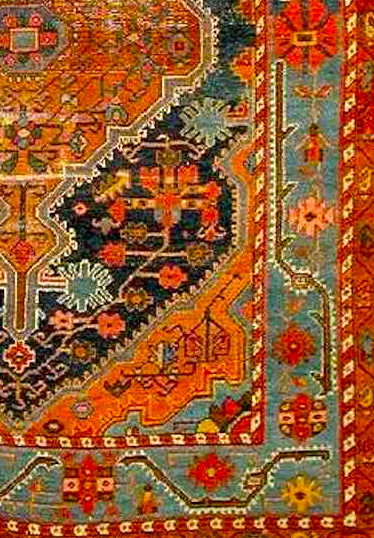
My mother’s neck parallels the floor now, her head planks forward like a tree bowed by too many winds.  So that all she sees, with what fragmentary vision is left her, is the floor and its world of carpeted colors, its hard wooden edges.  And this is our conversation – about the flowers she doesn’t want her feet to crush, though they are woven into a lovely rug she once selected; or the canyons and cliffs that occur when the carpet cedes to hardwood floors and she refuses to cross over.  Refuses, I mean.  So, we pull up a chair at the edge of the carpet and sit there for a while, safe in the borders of the flower garden, gathering courage to cross the great dark divide to her bedroom, a few feet beyond.

Only when she tucks into her bed after dinner, lying back into her hill of pillows, can I see her face – still pretty, and soft, and surprisingly youthful.  I kiss her goodnight, and she nuzzles into my neck like a baby, her pink gown swaddling her tiny frame.  She waves into the vague distance with a smile and a kiss when my father passes by, though she cannot find him with her eyes.

When I slip in to say goodbye early one morning, she urgently rises up from a dream, wondering how she can retire from this job she has gotten herself into, how she needs to go on and do something else.  I find her words marvelous in symbol and suggestion, as though her unconscious now speaks freely, unedited.  Don’t we all come to this, at different times, to a need to retire from This, in order to move on into that something else?  Marge Piercy’s poem caught my attention thirty years ago in a way I have never forgotten:   . . .we change.  Or we die, and then change.  That much we can count on, this unstoppable change.

One  night at dinner, she peers closely into the carpet and makes out some writing.  “What do those words say?”, she asks.  “Am I seeing right?  It looks like they say:  The End.”  

In amazement, I watch her find her way into retirement, into the final scenes before The End.  Her body and soul seem bent on something I cannot know.  All I can do is hold her when she is frightened, and honor the precipice that she sees.  The ground that shifts beneath her.   The valley she is daring to cross.  This change that calls to her in dreams.
another.Lou.story.

•06/30/2012 • 3 Comments

“We obsess in this country about how to eat and dress and drink, about finding a job and a mate.  About having sex and children.  About how to live.  But we don’t talk about how to die. We act as if facing death weren’t one of life’s greatest, most absorbing thrills and challenges. Believe me, it is. This is not dull.”    ~ Dudley Clendinen                                                                         


Dudley Clendinen’s voice is thick and soupy; listening to him speak on the radio is like eating oatmeal with a fork.  Most of it falls away.  His voice, already textured with a deep Southern softness , sounds remarkably like my father’s of late, and furthermore, I am used to getting what I can of the oatmeal, listening intently to a trail of syllables for an idea I can recognize.  I feel right at home.

I’m listening online to Maryland public radio shows interviewing Dudley in the year after his diagnosis with ALS.  Having worked as a New  York Times reporter, editor, and author, what mattered to him was conveying our human connections,  championing those sidelined, seeing how every life helps write history.  As a southern gentlemen, he covered stories of race, civil rights, homelessness, prisons, an abortion doctor’s conscience.   As a gay man and a recovering alcoholic, he cared and wrote about discrimination, the loss of friends to AIDS, the challenges of living with dignity and integrity.   And as a father, he spoke with  humility about his daughter, Whitney, and what he possibly has to leave a fierce 31 year old woman who carries already his gifts within herself.

That was in his last radio show, when he knew his voice had gone to soup and so stepped away from the microphone, yearning only to finish the book he was writing, wanting to defang the conversation about deathThis, too, is familiar.  My father longs to finish one more book, his fourth since receiving his diagnosis four years ago — his own clear-eyed look into the maw of death.

That is the weird blessing of Lou,  wrote Dudley about the disease which he chummed up to by dubbing it Lou; after Lou Gehrig, of course.  The weird blessing?  There is no escape, and nothing much to do.  It’s liberating, he said.

Last month, Dudley Clendinen died at the age of 67.  His last book will be published posthumously on his adventures — absorbing, challenging, thrilling, and never dull — with dying.  On his tombstone, these words will live:  I wouldn’t have missed it.

Here’s to Dudley, and his daughter, and his long lasting gift to the world.  His robust, candid, inspiring spar with a good, short life.

Glad you were here.

* * * * * * *

Listen to Tom Hall’s interviews with Dudley Clendenin on Maryland Morning at http://mdmorn.wordpress.com/2011/02/21/221111/

agriculture’s. local. seductions.

•06/16/2012 • 2 Comments

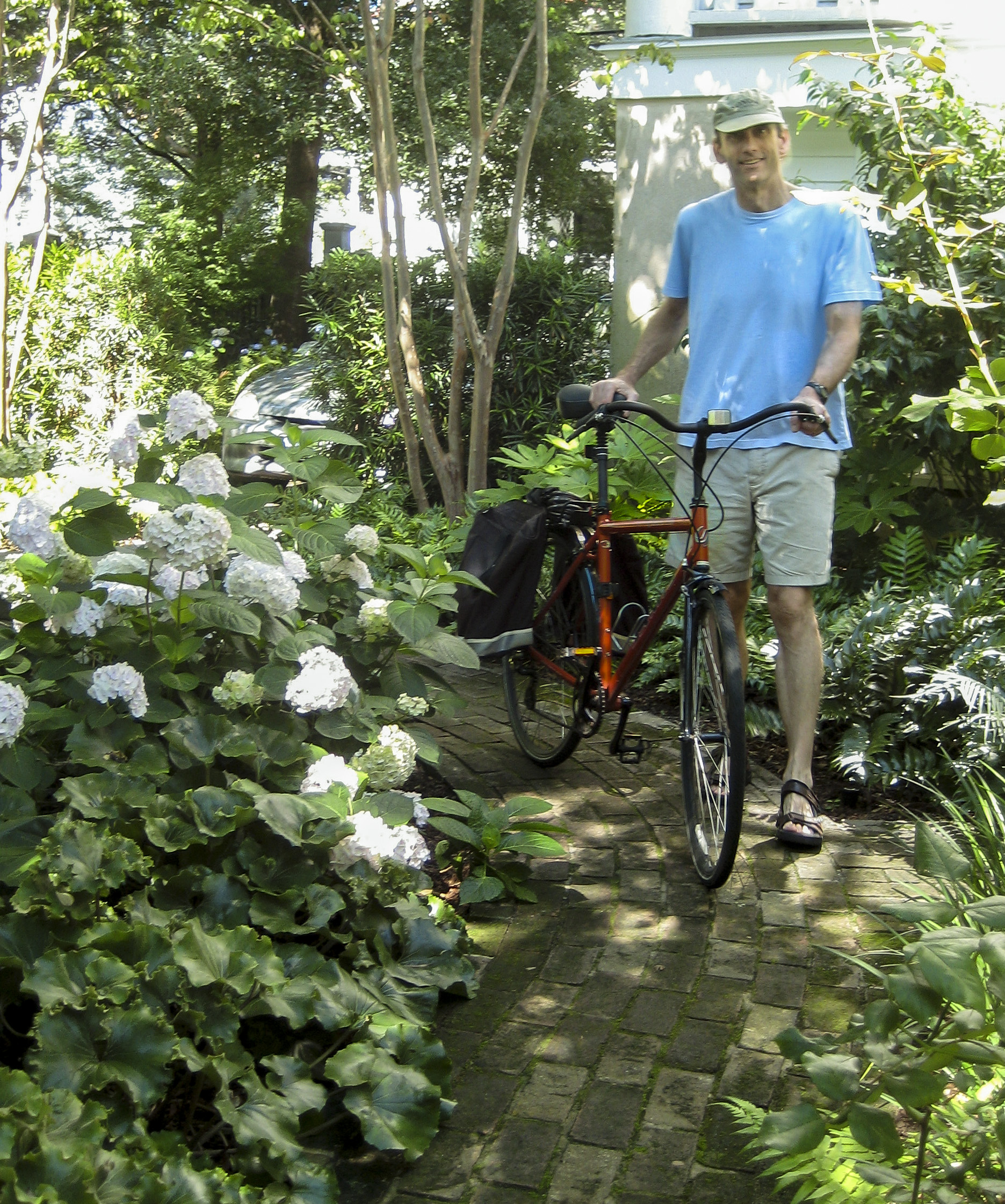
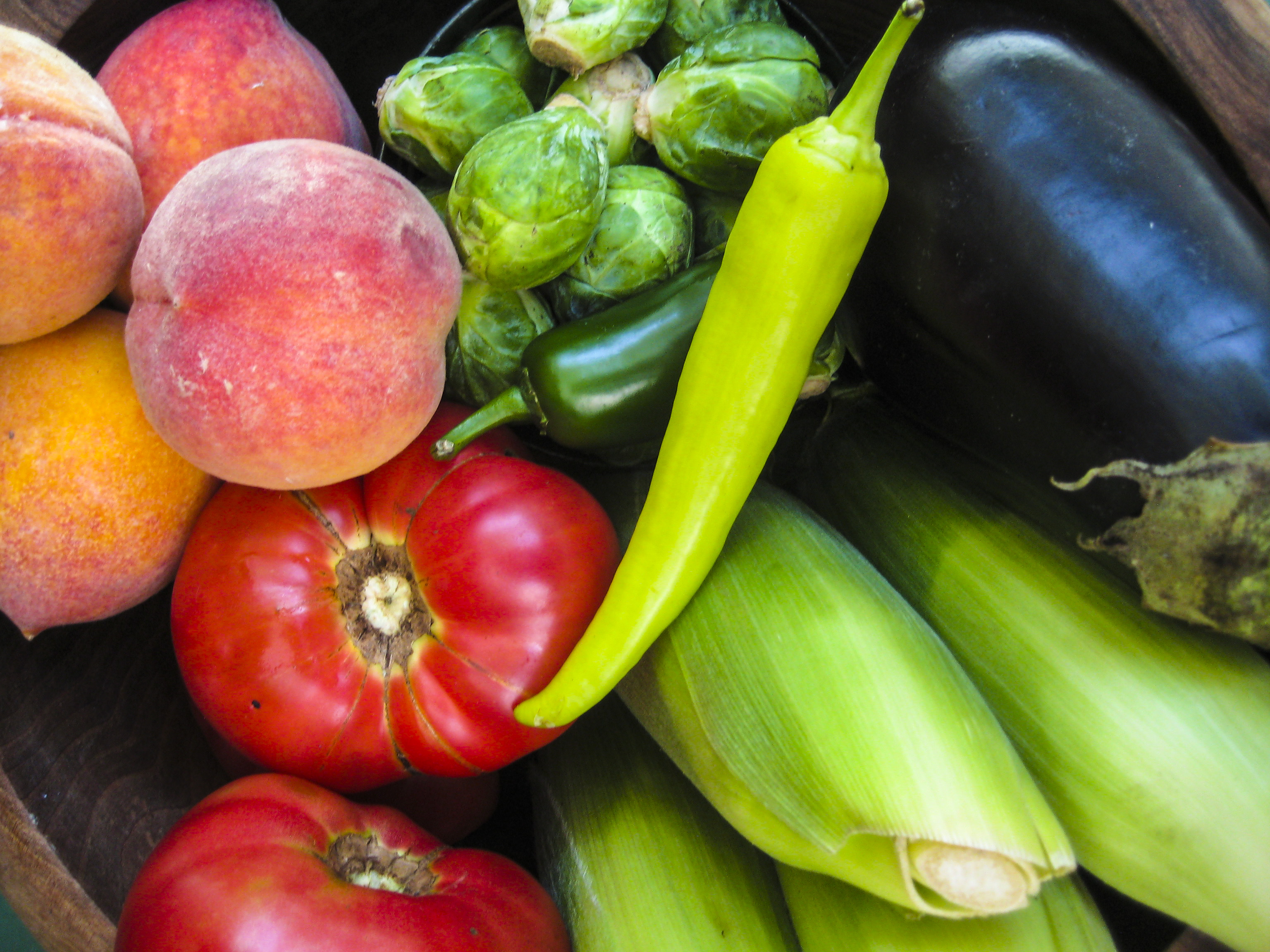
My husband bikes home from the Saturday Farmer’s market, saddle bags bulging with South Carolina peaches and blueberries, fresh corn on the cob, heirloom tomatoes, maybe some okra to sweeten up my favorite meal, the seductions of summer.  That’s for tonight, when we fire up the grill and sacrifice a pink fleshy salmon to the flame; but for breakfast we’ll batter up some whole grain pancakes, puffy with local blackberries and pecans, and soak them in the dripping sap of a Vermont maple tree.

Meanwhile, miles away, my father is quietly abstaining from the good life.  A tiny piece of  something went somewhere God never intended – and he choked on dinner, inflamed his throat, went gurney-wise to the emergency room and back while a painful, relentless cough set in. EMS returned him to the hospital the next morning to have a feeding tube reinstated which had inconveniently dislodged; an infection was found and scoped, cleaned, and treated; anesthesia, morphine, recovery, two days in bed.  Food, when there finally is some, will be an injection of liquid goop in a tube along with some orange gatorade and liquified medicine, bypassing his throat altogether.  His throat is out of the game, at least for now, his swallowing muscles having run the ball to the wrong goal.

Food is our way of ingesting life:  the warming sun and loamy earth in leaf and seed, or fish from the cold vigor of the sea.  When I eat, I become ever more a part of this planet, infused with the forces of these farming islands, fragrant with the flower blossoms that enticed bees into the sex of honey.  When I eat, I take on weight, gravitas, sinew, root; I am bounded to the kin-doms of plant and animal; I am lashed to this place by a million Lilliputian minerals.

So that, when I, or you, for that matter, or my father, no longer can eat, we start to unbind.  We lose those planetary connections; the threads that lash us here are snipped; we hover slightly above this agricultural plane.  Fasting makes us so;  elevated, unmoored to the earth.  Closer to spirit, some would say.  Freer to imagine a mystery beyond this heft, this weight, this earth.

My father is slowly relinquishing life’s bounty, one taste at a time.  His senses have lost another song of praise.  With each loss, life becomes less flavorful, less pungent, less – just less – of this good earth.

It is hard rising above these ripe colors, into the pure, untethered light.

Attending. (the) Last. Stretch.

•05/22/2012 • 16 Comments

She leaned across the table, peering around the fresh lace-cap hydrangeas I had cut, the little pink roses peeking out, and asked me in her kindliest voice, the one reserved for the politeness due strangers, for my name.  The air was sucked out of the dining room where my family had gathered for a Mother’s Day dinner, where my husband’s sizzling lamb and asparagus were set before her, the air gone out for one sliver of a moment, before I recovered and jumped up to put my arms around her, saying Mother, it is me, your daughter, and she cried to know that she had not known.

As I tuck her arm into mine to navigate down the hallway of their home where smooth white carpeting stretches before us, my reassurance that all is flat and safe ahead is not entirely trusted.  For her, there are paralyzing stairs to negotiate as she trembles forward, sliding her loafer ahead to test each frightening step.  The way ahead, she seems to intuit, is one of descent.

I have watched my father’s muscles abandon their posts, one by one, seceding with ALS from his clear and commanding mind.  Now, I am watching my mother’s mind foreclose.   As my father’s muscles grow still and stiller, her legs grow restless and anxious to roam, as though she carries the jump and flare of movement for them both.  She wanders rooms, grasping a cane, peering into darkness, with a lifelong need to be of use.  But what she is looking for eludes her.  She is at home, looking for home.

African Americans in the South have a word for this stretch of the journey.  They call it traveling.  As though there is a fluid time between life and death, an in-between, a crepuscular hour through which one may meander, visiting the dead we cannot see, going far places we do not know how to name.  I prefer traveling to the medical terms we dread to hear — it honors this stretch as integral to the journey.  It suggests a necessary loosening of the grip on this mapped territory and clocked time, an opening to other mysteries that surprise us yet.

So, my mother is traveling, I want to say. She describes the waiting room where she looks for a plane to board; she prepares for a crossing toward home; she searches the darkening sky. Her eyesight is gone, and so she is right to move cautiously through the dim shape of these days, seeing things only through a glass darkly, yearning toward the face-to-face.

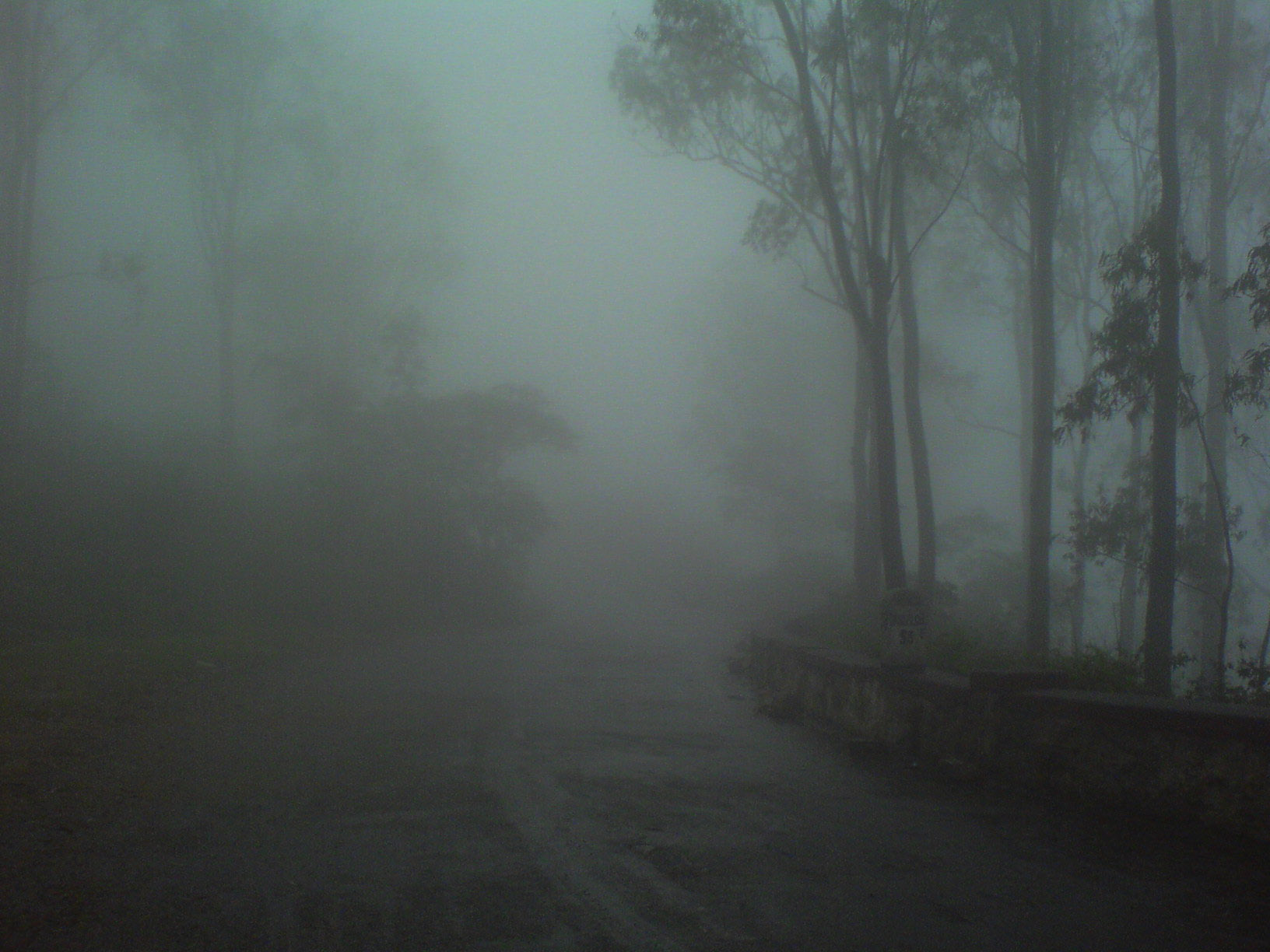
My father sits beside her, his slurred words now too thick for her to understand.  He holds her hand when he can reach that far; he smiles to warm and reassure her; he grieves to see her go another way.  She blows a kiss back to him, across the foggy bottom.  Even there, in the murky, tenebrous passages they travel, love is never lost.

(The) Architecture. (of) Lasting. Scars.

•05/12/2012 • 3 Comments

One year ago, in the mad burgeoning of early May, Nancy died.

In the still dawn this morning, I listen to a fountain flow on and on into silence.  I follow the shiny new light wetting oak leaves; from my porch I eye dead branches that want to fall on my tender hydrangeas.  I see the wrinkled wood siding of my neighbor’s grand and beautiful home rippled by the fire of 1861 and left as a sign, a testimony to the flames that swept down this street; flames that eradicated every other home save the one whose porch I’m perched upon and their lovely blistered one.

It is a point of interest with the horse-carriage drivers, to direct tourists in t-shirts toward these strange architectural wrinkles.  They are a sign that the past lives here, in the furrows and sagging flesh of the houses; that life in Charleston is scarred but not destroyed.  That we live among fresh blue mop heads and glistening morning light and we are a ravaged city.

On the other side of my house is an old cemetery – the church that went with it burned down in the same fire.  But the tombstones remain, and the residents there.  Occasionally an old man comes to pull the weeds and trim the dead palmetto fronds and honor the dead and their memory, 150 years passing.

 This time last year, Stephanie and her sisters rose to the pulpit, one by one, to build an altar of words to their mother, taken like a raging fire by ALS.  They made a house of their affection and memory, a strong, enduring house to live in, and invited us in.

Today, Stephanie moves through a lush, blossoming life with grace and optimism, her daughters opening their colorful petals, her work brimming with new vitality, her language growing greener and more textured with each writing.  Sometimes, she turns her face in just a certain way she knows nothing about, and suddenly I see the blisters as clear as the side of this house.  Not on the surface of her skin, but in the deeper fibers of loss and grief.  They striate any grand old house of memory.  Like a good scar, they linger long after healing, marking the way we came by.

I believe now more than ever that these trembling lines are beautiful, and human, and of the whole.  They are born of fire, they brand us for life. And if we attend them with unctions of awareness, if we apply to our own buckling surface a fierce kindness, as I have let Stephanie teach me in the balm of this passing year; I want to say: these scars, though lasting,  are strangely, searingly, blessed.


a. lexicon.(of) silence.

•04/09/2012 • 4 Comments

Stephen Hawking has a new headband sort of thing with a matchbook-size computer that actually reads his brainwaves and spits them out, letter by letter, into words on a lit screen.  Without any speech or movement possible, Hawking exercises the only thing he has left, and has in spades, which is his brain; concentrating on spelling out his colossal thoughts in tiny portions, in distinct letters, invisible, but true.

I am interested in this drive to express what is in us:  memories, ironies, curious thoughts; love and humor and regret, connections that stir in any given moment.  So that when words are gone, we will do almost anything to get the inside out, to make the invisible seen, the silent things sing.

On Good Friday, I read a small message my father had posted in his church’s bulletin – the church where he has served for 25 years as Theologian in Residence, delivering golden-tongued lectures, sermons, and talks by the hundreds.  It read:  My illness will no longer permit me to speak. . . . When greeting me. . . please do not feel any awkwardness if I am unable to voice a reply.  About all I can offer is a hearty handshake for the men, a sly wink for the women, a quick hug for the kids and a smile for everyone.  Your encouragement means far more to me than I am able to express.  

For another man of the mind, like Hawking, my father is down to expressing that which is in his heart.  The wink, the handshake, the hug, the smile . . . all of these make the invisible visible, make connections alive and feelings light up.  They are no less than the thoughts captured on Hawking’s headband, these human tonalities.  They are no less than anything, really.  They make up the lexicon of the human heart.

When I was with my parents a couple of weeks ago, we pulled up to the dinner table and lowered our heads, as always, to voice our thanksgiving for the day.  My father began, his voice rising as it could, and made its way over familiar geography.  I realized, at some point, that I hadn’t understood a word he had said, but that I understood the mountains and valleys we were crossing.  The cadence and rhythm of his voice in blessing was utterly known to me.  I was catching it, not like a computer catches a brain-wave in patterns precise, but more as a heart catches a feeling.  The words no longer mattered; it was still, as ever, prayer.

So, I am learning a new lexicon.  I am paying attention to what is silent, inexpressible but true.  I am listening beneath words to the heartbeat. I am reaching for whatever is alive and real, and receiving the truth as I can, feeling my way there — wink by prayer, smile by sly little smile.

Autumnal.Leafy.Spring

•03/20/2012 • 1 Comment

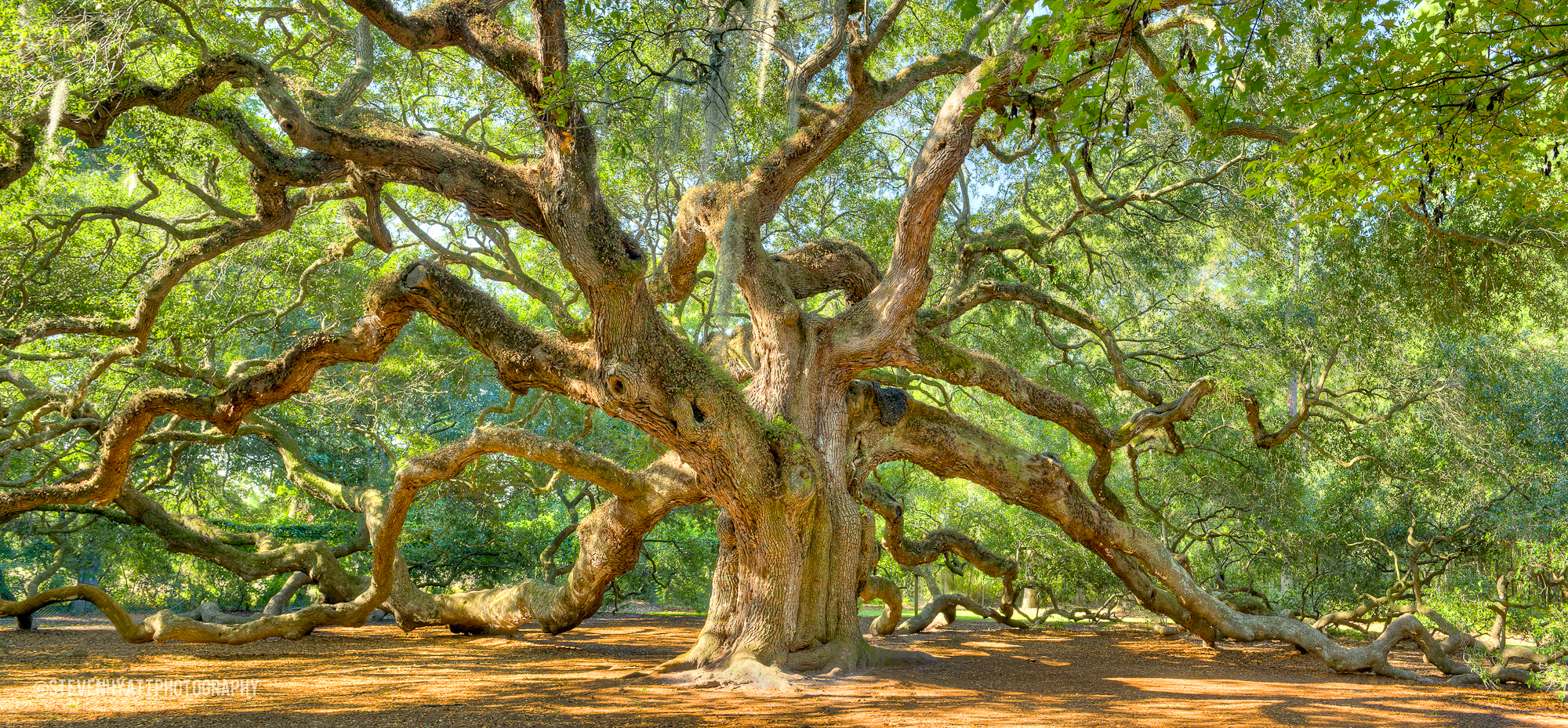
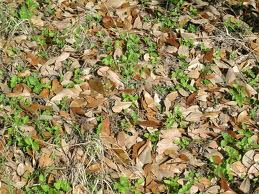
The yard is doused. Covered. Crusted over by a slick brown carpet of dead oak leaves. It’s 80 degrees outside, and spring is in full busting-out mode here in Charleston, but thanks to the mixed-up deciduous habits of Quercus virginiana, it seems like fall too.  Raking leaves was autumnal agony in the Piedmont of North Carolina, where I grew up, but at least there was a chill in the air to energize the dreaded chore. Here, we rake all spring, amidst sweat and gnats and sneezing, and more raking.  Beside every driveway there are clusters of big brown bags from Lowes (plastic bags were recently outlawed) filled with leaves. They stand tall, like vertical baked potatoes, and taunt with the Lowes slogan, “Always keep improving.”

This seasonal jumble seems about right to me, as I head into these spring months so dense with last year’s dateline, so heavy with the thick pollen of memory. Just 330 days ago, these were the last months and weeks of my mother’s gutsy wrangling with ALS. Everywhere around us the beautiful world was greening, budding, breaking forth, but her beautiful leaves were falling, and falling fast.

I dread this spring. I love this spring. I am the awkwardly, gangly, grandly reaching branches of the live oak, losing leaves, welcoming new ones, all at the same time.

At Christmas, Susan gave me a lovely anthology of the literature of grief called In the Midst of Winter. It’s been by my bedside ever since. The book arranges poems, excerpts from classic literature and other nuggets of wisdom by season: Winter, Spring, Summer and Fall, using natural cycles and imagery to mark the typical progression and cycles of grief. Spring, Mary Jane Moffat, the anthology’s editor, writes, “is the period of great despair and yearning…this pull between the future and the past.” Or as Lady Ise, a 9th century Japanese poet said, the period when there is “nothing left to cling to.”

I am not fully in that spring, for I know I have great strong branches to cling to. Family, memories, gratitude, springtime itself.   I am in the spring  that is tentative, that loops back upon itself, and then the wind blows more leaves down. A spring of proms and Easter and Mother’s Day, all bookmarked by what was happening last year at this time.  Grief, as Moffat says, “is not tidy.” It is deciduous. It requires raking, and more raking.


A. Laugh. (for) Spencer.

•03/05/2012 • 4 Comments

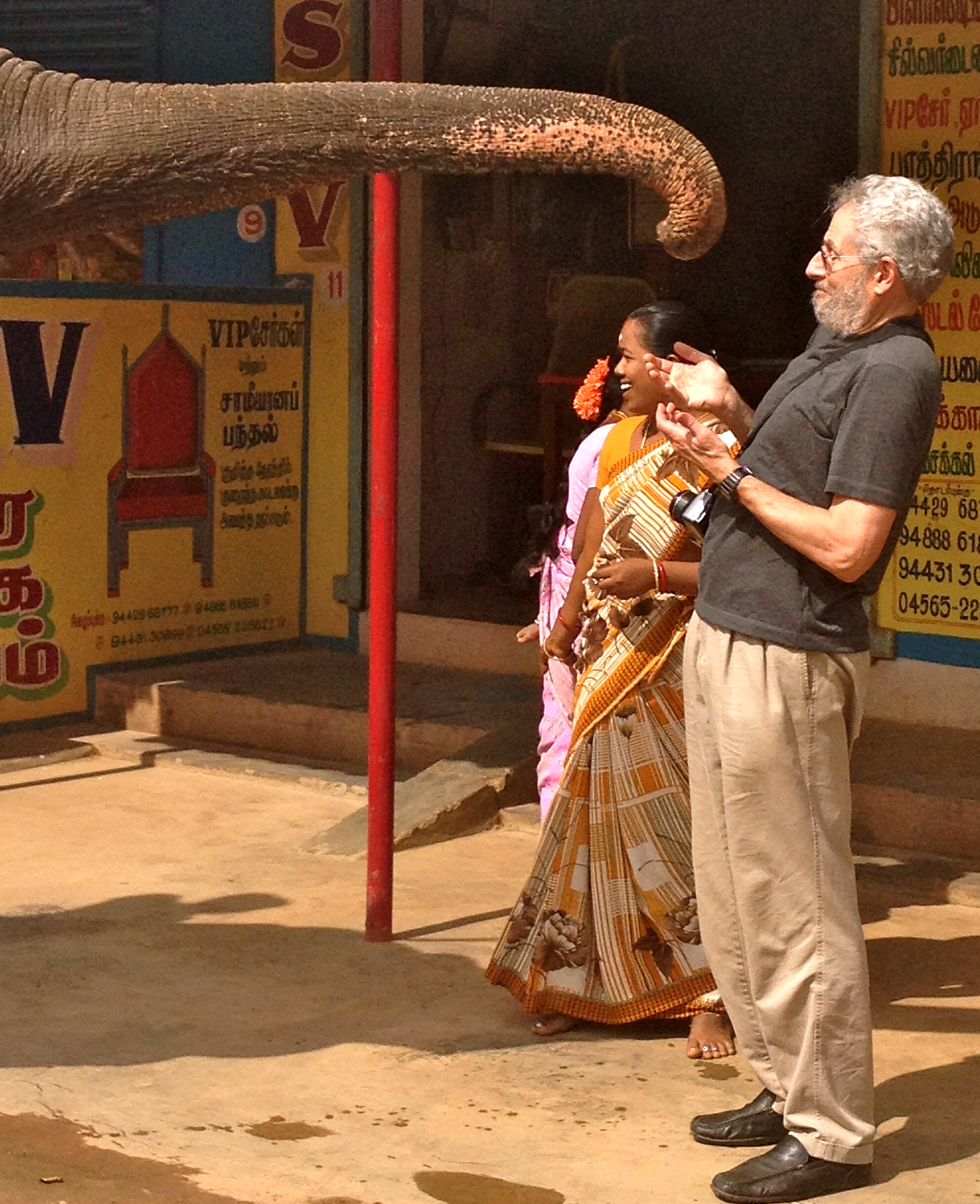
The elephant lumbered toward the temple amid buses and rickshaws and street sweepers, blessing children and supplicants along the way.  His ungainly enormity is revered in India, as the Hindu elephant god, Ganesha, is revered – as a benefactor, a bestower of blessing and bounty, a deity inspiring love and devotion.

The trunk of this elephant curls out to receive money, which he lifts directly to the man on his back, or peanuts which he keeps for himself; it nuzzles a salty palm, blows on a baby’s face, or drapes kindly across a devotee’s bowed head.   His ears flap at the flare of horns; his tail swings at flies and motorcycles; and when he lowers his head and moves straight toward me, I can’t help it.  I skitter fast.

Spencer has gripped a camera in readiness since we, and a few others, started our travels together in India.  But with that pink question mark unfurling in his face, he seems to have dropped the camera instinctively and become an exclamation mark at the end of the question!

I’ve got to say:  this is the way I want to greet the holy, like Spencer.  Always surprised, because, after all, I never know when holiness, in the unexpected noon of a normal day, will flare out like a trumpet.  And laughing, because what could be a better way to greet something so enormous and beneficent?  And empty, open handed.  Because the Mystery wants to kiss our cupped hands, and breathe upon us some unexpected blessing, and ask us to give up the small lens through which we see the world. And live, then, like a mark of exclamation.

already.Lent.stalls

•02/26/2012 • 5 Comments

"Spirari" by John Duckworth

It’s the first Sunday in Lent, but instead of church, I’m being penitent at home, sifting through piles, sorting through stacks of notes, magazines and journals half-read and put aside for that elusive “another time,” that blank canvas of space, hours and attention that I can’t seem to find — it’s sunk too far under the clutter and eaten away by a gnawing sense of being perpetually behind.

And this just four days after Ash Wednesday. After sitting quietly in Circular Church’s worn old pews, reflecting with intention and ambition, even, on doing Lent right this year. My goal: To embrace these 40 days by opening myself to something beyond my ineffective habits. To prune and clear away that which doesn’t serve me (those piles!) and make room for an eastering growth.

Outwardly I “gave up” the car, planning to make as many trips as possible by bike during these 40 days, but the next morning was running late for a meeting and surrendered, turning the key in the ignition instead. Inwardly, I intended to “give up” the destructive drive for affirmation, to explore the harsh edges of ego that trip me up, that I need to relinquish to make room for generosity, for possibility, to open doors to authentic creative work that is not driven by a greedy need for recognition. This is what I wrote on the note paper that the ushers gathered from my fellow Ash Wednesday worshipers; this was the burden I wished to lay down, to bring to the altar and add to the small fire of similar notes that was ignited right there in a small urn on the communion table, from which we then stirred the ashes and made the imposition of a cross, however faintly, on our forehead.

The bike riding is so much easier, and even then, I’ve fallen short several car trips already.

Maybe Lent isn’t about winning the self-discipline war. Maybe it isn’t about achieving goals and mastering intentions, and feeling proud and accomplished at doing so.  Perhaps this sense of failure is my desert, my wilderness, and wandering is just that, wandering. This unraveled unease is my annoying traveling companion, who obviously needs a shower.

Not long ago I visited the artist John Duckworth’s studio, and was mesmerized by these photographs —  so full of motion, of gracefulness and dancing mystery.  “Is it a fabric? Tissue paper or ink dissolved in some solution?” I asked.  “No one ever guesses it,” John said. “It’s fire. A flame.”

Spirari, the photography series title, is from the Latin, to breathe.  “I’m inspired by the delicate movement that comes from such a harsh element,” John said.

When our Ash Wednesday offerings were turned to brief ephemeral flame, two things flashed to mind: the residual ashes that did not fit in my mother’s columbarium and still sit (waiting for my sisters)  in my dining room, and these searing images.  To burn. To burnish. To breathe. To let what is harsh and destructive in us also open the way toward delicate movement.

Is it possible?

a. lanced. sadhu.

•02/18/2012 • 2 Comments

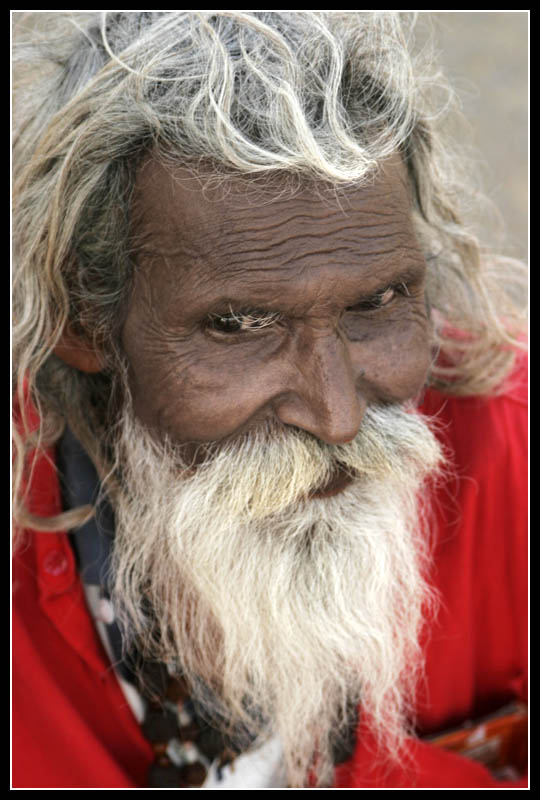
Throngs of pilgrim bodies press tightly toward the temple, such that one wonders if breath is still possible.  Autonomy disappears into a single amoeba flow.  This is India, and the holy festival that gathers these thousands happens once in each lifetime; it makes of their many bodies a thrashing sea of devotion.

But then, in the middle of the surging, the waters quietly part.  A hush rolls over like a wave; a path opens around this moving silence.  A sadhu, a holy man, is coming through.  Several inches of metal protrude from his chest; as he passes by, the rest of the sword becomes visible plunging through his back.  Calm and elevated, this itinerant half-naked holy man wanders on; no blood seeps from his wound, only the cleaving of his flesh cleaving the crowd.

Another sadhu, further on, pulls a heavy ball and chain with a ring through his eyelid.  Another is supine on a bed of sharp nails.  Still another has not sat or lain for 14 years. * His body covered in dung and ashes, the sadhu seeks a final liberation from this flesh, finding a peace not of this world.

I have returned to India, not as a pilgrim where sadhus roam, but on a pilgrimage, nevertheless.  I’m seeking women at work with their spindles and looms, needles and threaded cotton, with their wild silk and vegetable dyes, busy making simple beauty of this complicated world.  Women who drape themselves in color rather than ash, the scent of jasmine rather than dung.  Women who tend to birth and death, and swaddle the whole of it with their hand-made grace.  This, too, is India.

Back at home, my father exercises a daily courage in remaining alive, as vividly as possible, in the gift of his body, even as it deletes its pleasures, grows heavy with each movement, or fires with the sharpness of pain.  I’m convinced that staying every bit present to this earthbound life is a spiritual discipline at times as mighty as that of a sadhu, who yearns to transcend it.  My father doesn’t need a bed of nails, a pierced eyelid.  His day offers up its own ball and chain.

What he needs, rather, is what I imagine that all of us need.  We need to know what those women know, which is the grace of good work, the hand curving in love, the spell-binding, outrageous color of this world.  And to feel it, every day, like a festival in our blood.

And then, too, we need to know what the sadhus know, do we not?  That we leave it all in ashes, and far too soon.  That flesh will fail; that we all are one day lanced just there at the heart of everything we love.  Cleaved open to know the whole of it, the hard-as-nails truth and the numinous; both.  That we move on in silence, at last, like a wave on the ocean.  And with a peace – here is my hope – of this world, and not.

____________________

*These observations were made by Don Bloch, and recorded in his book, Seduced by the Beauty of the World.